

NorwayPlaces to Visit
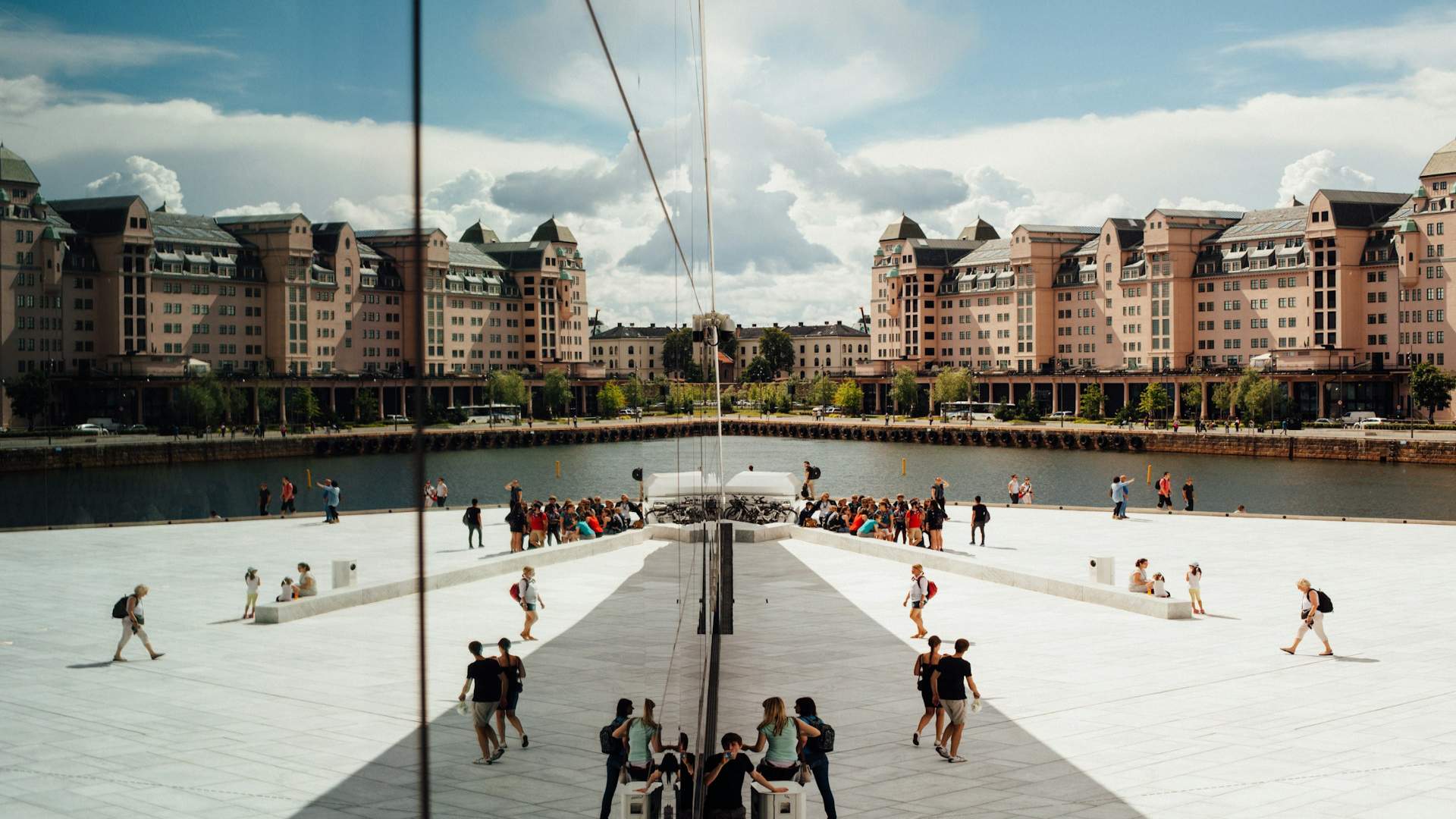
Oslo – The Fjord City That Feels Like a Village with a Crown
Oslo is built where fjord meets forest and nobody is in a hurry. The city wakes slowly with the smell of fresh cinnamon buns from corner bakeries, trams rattle past 1,000-year-old fortress walls, and the Opera House rises from the water like a glacier you can walk on. In summer the sun barely sets, turning 10 p.m. into golden hour; in winter the same streets glow with candles and Christmas markets while northern lights sometimes dance overhead. Vikings ships sleep in museums, modern sculptures wrestle in parks, and every second person smiles like they know the secret to happiness is good coffee and not taking life too seriously. This is Scandinavia’s greenest capital — expensive, yes, but so beautiful it feels like the price is worth every krone.
Top Activities and Experiences in Oslo
These are the moments that taste like cinnamon and pure fjord air.
Walking the Opera House Roof at Sunset
Climb the marble slopes of the world’s most beautiful opera house while the sun turns the entire fjord molten gold and the city sparkles like scattered diamonds below.
Vigeland Park at Golden Hour
Wander among 212 granite and bronze nudes wrestling, dancing, and living life while the late Nordic light turns every statue into a glowing masterpiece.
Fjord Cruise to Bygdøy at Magic Hour
Glide past green islands and wooden summer houses while the water reflects a sky on fire and the city skyline shrinks behind you.
Holmenkollen Ski Jump View at Sunrise
Ride the metro up to the iconic jump tower and watch the first light hit the fjord while the city sleeps 357 m below.
Sauna & Fjord Swim at KOK Oslo
Sweat in a floating sauna, then jump into 8 °C water while the skyline watches — the Norwegian definition of bliss.
Cinnamon Bun at Åpent Bakeri in Frogner
Eat the world’s best skillingsbolle still warm from the oven while sitting on a park bench watching Oslo life glide by.
Ready for Fjords, Sculptures, and Cinnamon Buns?
Oslo doesn’t rush — it invites you to slow down, breathe the fjord air, and remember what happy feels like. Velkommen — welcome to Norway’s green capital!
Frequently Asked Questions (FAQs) About Oslo
What are the absolute must-do experiences in Oslo?
The must-do experiences are walking the Opera House roof at sunset, Vigeland Park at golden hour, fjord cruise to Bygdøy at magic hour, Holmenkollen at sunrise, sauna + fjord swim, and eating cinnamon buns at Åpent Bakeri.
How many days should I spend in Oslo?
You should spend three to four days — one for the city centre and Opera, one for museums and Vigeland, one for the fjord and islands, and one for Holmenkollen and relaxation.
When is the best time to visit Oslo?
The best time is May–September for midnight sun vibes and outdoor life. December for Christmas markets and snow. Winter (Jan–Mar) is cold but magical with possible northern lights.
Is Oslo really that expensive?
Yes — one of Europe’s priciest. But museums are often free, parks are world-class, and you can eat well on a budget with bakeries and markets.
Where should I stay in Oslo?
Frogner or Majorstuen for quiet elegance, Grünerløkka for hip vibe, Aker Brygge for waterfront luxury, or Sentrum for central convenience.
Best museums?
Viking Ship Museum (closing 2026 for move), Fram Polar Ship, Munch Museum (The Scream), and National Gallery.
Is public transport good?
Excellent — trams, metro, buses, and ferries all on one app (Ruter). Buy an Oslo Pass for unlimited transport + free museums.
Can I see the northern lights from Oslo?
Rarely — the city is too far south and light-polluted. Head north to Tromsø for reliable sightings.
Best food in Oslo?
Seafood at Fiskeriet, new Nordic at Maaemo (3 Michelin), cinnamon buns everywhere, and kebab from a late-night truck after bars.
Is Oslo walkable?
Very — the centre is compact. Use trams or bikes for longer distances.
Where’s the best view?
Opera House roof (free), Holmenkollen tower, or Ekeberg Park sculpture trail.
Is one day enough?
No — you’ll see highlights but miss the soul. Two days minimum, three ideal.
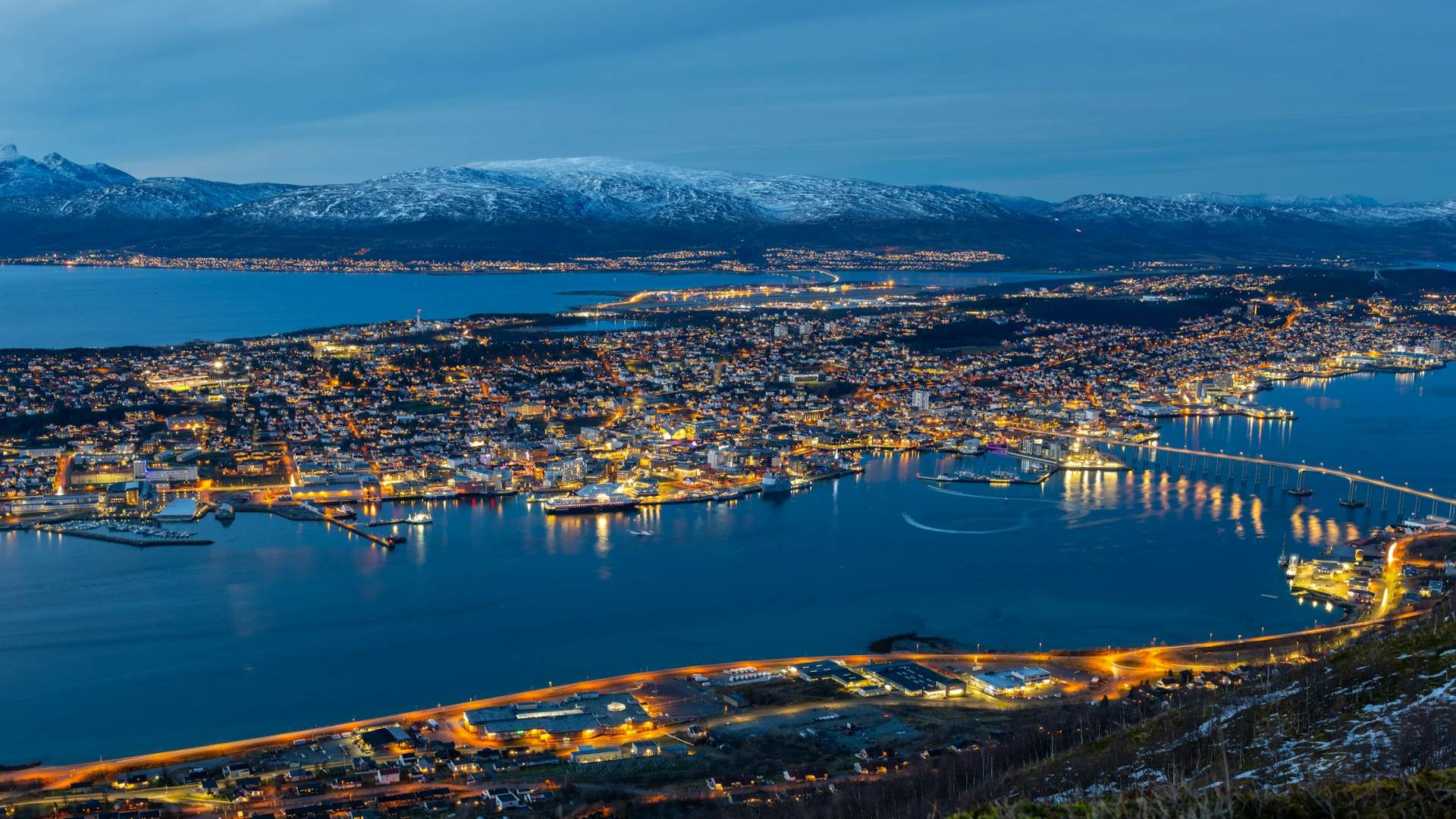
Tromsø – The Arctic Gateway Where the Northern Lights Dance
Tromsø sits 400 km north of the Arctic Circle like a colourful wooden town that refused to freeze. Snow-capped mountains plunge into fjords that glow turquoise even in winter, the Arctic Cathedral’s triangular peak rises like an iceberg made of concrete and glass, and from September to March the sky explodes in green, purple, and pink curtains of northern lights almost every clear night. By day reindeer pull sleds through silent valleys and whales breach just offshore; by midnight sun summer the light never fades and locals barbecue on beaches at 2 a.m. This is the “Paris of the North” — vibrant, creative, and so full of polar magic you’ll forget what darkness feels like.
Top Activities and Experiences in Tromsø
These are the moments that taste like cloudberries and pure wonder.
Northern Lights Chase by Minibus
Drive into the wilderness with guides who read the sky like sailors read stars — stand under dancing green curtains while the cold bites and your camera clicks like crazy.
Fjellheisen Cable Car at Midnight Sun
Ride up 421 m in June when the sun never sets and watch it skim the horizon while the city glows gold below like it’s stuck in eternal sunset.
Reindeer Sledding & Sami Culture
Ride a sled pulled by reindeer through snow-covered valleys, feed them lichen, then sit in a lavvu eating reindeer soup while joik singing echoes around the fire.
Whale Watching Safari (Nov–Jan)
Board a boat or RIB as humpbacks and orcas follow herring schools into the fjords — breaches so close you feel the spray.
Arctic Cathedral Concert
Sit inside the iconic triangle while midnight sun or northern lights filter through stained glass and the organ fills the space with sound that feels sacred.
Dog Sledding Under the Stars
Husky teams pull you through silent forests while the aurora dances overhead and the only sound is paws on snow and happy dog breath.
Ready for Northern Lights, Reindeer Sleds, and Midnight Sun?
Tromsø doesn’t just show you the Arctic — it lets you live it, one aurora chase at a time. Velkommen — welcome to the Paris of the North!
Frequently Asked Questions (FAQs) About Tromsø
What are the absolute must-do experiences in Tromsø?
The must-do experiences are northern lights chase by minibus, Fjellheisen at midnight sun, reindeer sledding with Sami culture, whale watching safari, Arctic Cathedral concert, and dog sledding under the stars.
How many days should I spend in Tromsø?
You should spend four to seven days — two for city and lights, two or three for winter activities (whales, dogs, reindeer), extras for fjord cruises or Lyngen Alps.
When is the best time to visit Tromsø?
The best time is September–March for northern lights and winter activities. November–January for whales. June–July for midnight sun and hiking.
Will I definitely see the northern lights?
No guarantee — depends on clear skies and solar activity. Professional chases have 90 %+ success rate over multiple nights.
Where should I stay in Tromsø?
City centre for convenience (Clarion The Edge, Scandic Ishavshotel). Harbour views: Radisson Blu. Quiet: Thon Hotel Polar.
Best food in Tromsø?
Reindeer steak at Emmas Drømmekjøkken, fish soup at Fiskekompaniet, and craft beer at Mack’s Ølhallen (world’s northernmost brewery).
How do I get to Tromsø?
Fly direct from Oslo (1.5 h) or major European cities. Hurtigruten coastal ferry from south.
Is Tromsø expensive?
Yes — Norway prices. Save with grocery meals and free activities like hiking.
Is it very cold?
Gulf Stream keeps it milder than Alaska — winters average –4 °C. Dress in layers.
Best northern lights tour?
Small-group chases with Arctic Explorers or Tromsø Safari — professional photographers often included.
Can I see polar bears?
No — too far west. Head to Svalbard for polar bears.
Where’s the best view?
Fjellheisen at midnight sun, Prestvannet lake for city reflection, or Bridge of Love for harbour panorama.
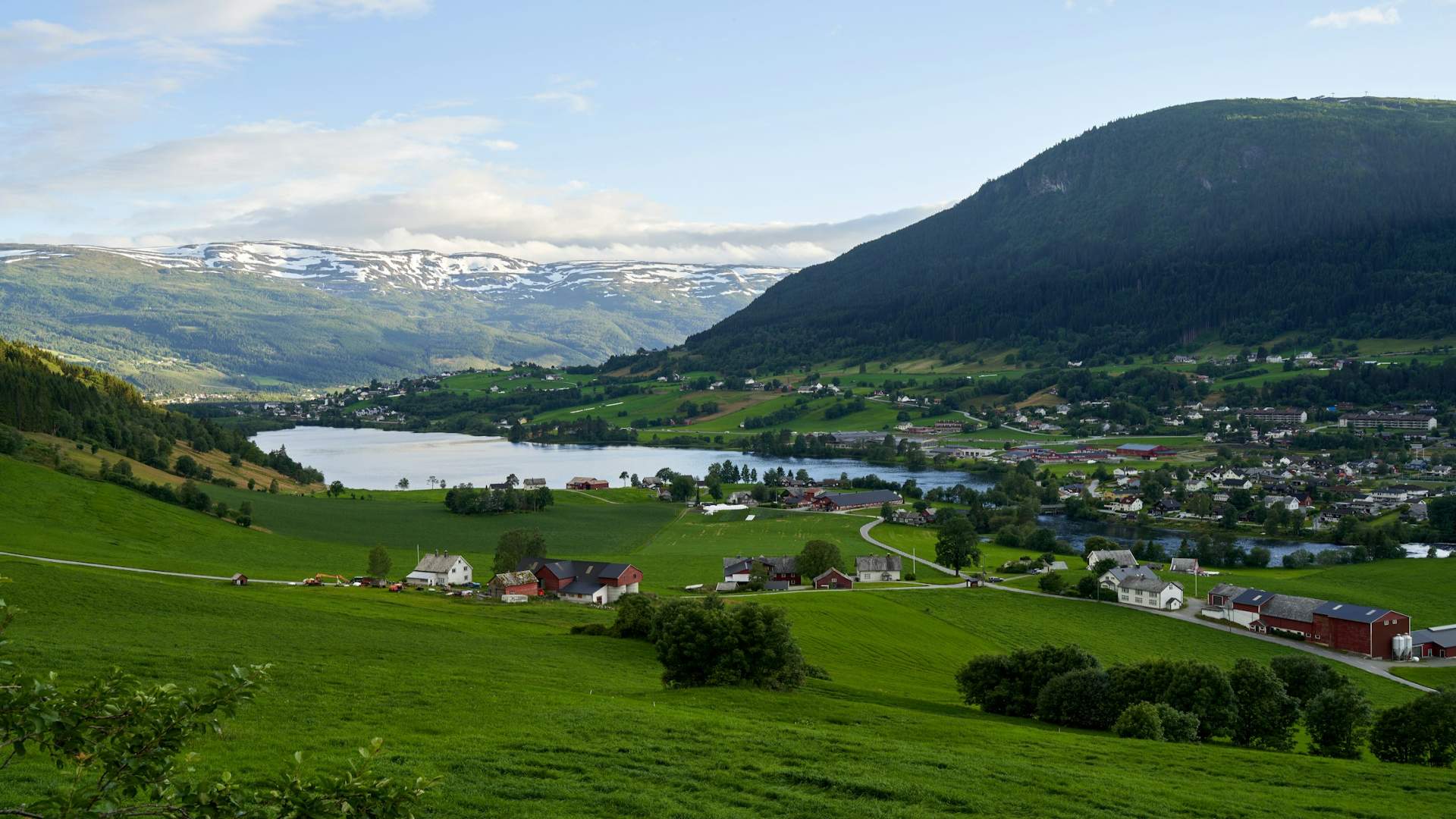
Voss – Norway’s Undisputed Adventure Capital
Voss is the town that looked at Norway’s insane nature and said “hold my aquavit.” Jagged mountains drop straight into mirror-calm fjords, rivers rage white enough to make your knuckles match, and the world’s craziest extreme sports festival turns the place into a circus every June. By winter it’s powder heaven for skiers; by summer it’s base-jumpers leaping from cliffs and rafters screaming through canyons. The new gondola rockets you to 1,000 m for views that stretch to the sea, while traditional wooden farms serve rømmegrøt like nothing changed since Viking times. This is the place where adrenaline meets hygge — wild, welcoming, and so full of natural drama it feels like the gods designed it for Instagram.
Top Activities and Experiences in Voss
These are the moments that taste like adrenaline and pure mountain air.
Voss Gondola to Hanguren at Sunset
Ride Norway’s largest gondola to 820 m, walk the ridge while the sun turns the fjords molten, and watch paragliders launch into the golden light.
White-Water Rafting on Raundal River
Drop into Class IV rapids while the canyon walls tower overhead and your guide shouts commands that barely compete with the roar.
Skydiving Over the Fjords
Jump from 4,000 m with Skydive Voss — freefall while mountains, lakes, and sea spin below like a kaleidoscope on steroids.
Ekstremsportveko (Extreme Sports Week)
Join the world’s wildest festival in late June — base jumping, kayaking, paragliding, and concerts until the midnight sun finally gives up.
Bordalsgjelet Gorge Walk
Follow metal stairs bolted into a narrow canyon while a river thunders below and spray turns the air into permanent mist.
Winter Skiing at Voss Resort
Hit 60 km of pistes with views over the town and fjords — or go off-piste with a guide for powder that feels bottomless.
Ready for Gondolas, Rapids, and Extreme Sunsets?
Voss doesn’t just offer adventure — it throws it at you with a grin and dares you to keep up. Velkommen — welcome to Norway’s adrenaline heart!
Frequently Asked Questions (FAQs) About Voss
What are the absolute must-do experiences in Voss?
The absolute must-do experiences are sunset from the Voss Gondola, white-water rafting on Raundal River, skydiving over the fjords, Ekstremsportveko festival, Bordalsgjelet gorge walk, and winter skiing at Voss Resort.
How many days should I spend in Voss?
You should spend three to five days — one for town and gondola, two for adventure activities, extras for recovery or more extreme sports.
When is the best time to visit Voss?
The best time is June–August for summer adventures and Ekstremsportveko, or January–March for skiing and northern lights chances.
Is Voss only for extreme sports?
No — it’s also for hiking, fjord cruises, food, and relaxation. You can do zero adrenaline and still love it.
Where should I stay in Voss?
Town centre for convenience (Fleischer’s Hotel, Park Hotel Vossevangen). Lakeside: Stalheim or Myrkdalen for views.
Is the gondola worth it?
Absolutely — Norway’s largest, with restaurant, hiking trails, and the best views in the region.
Best food in Voss?
Smalahove (sheep’s head) at local farms, fresh trout at Voss Gondola restaurant, and craft beer at Voss Bryggeri.
How do I get to Voss?
Train from Bergen (1 h, scenic) or Oslo (5 h). Drive from Bergen (1.5 h). Nearest airport Bergen.
Is Voss expensive?
Yes — Norway prices. Budget by eating local and using public transport.
Can I see northern lights in Voss?
Yes in winter on clear nights — less reliable than Tromsø but possible.
Best day trips from Voss?
Flam Railway + Nærøyfjord cruise, Hardangerfjord, or Bergen (1 h train).
Where’s the best view?
Hanguren from the gondola at sunset, or Lønahorgi hike for 360° solitude.
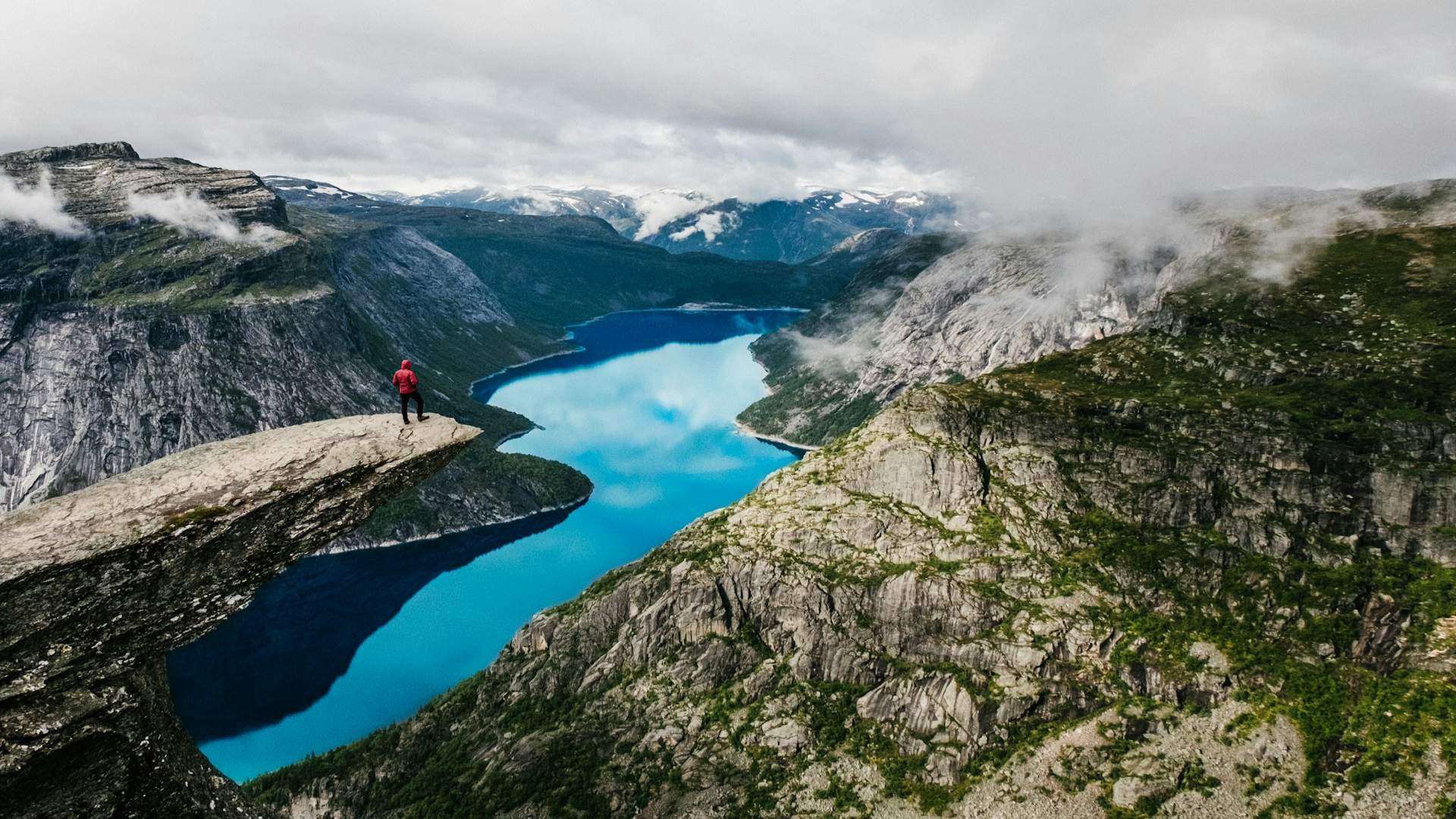
Trolltunga – The Rock Tongue That Hangs Over the Abyss
Trolltunga juts out 700 metres above Ringedalsvatnet lake like a giant stone tongue daring you to step onto it. The 23 km round-trip hike climbs through moon-like plateaus, past waterfalls that crash into the void, and along ridges where the wind howls like the troll itself is laughing at your fear of heights. At the end you stand on the famous rock with nothing but air between you and a turquoise lake far below — one of the most photographed spots on Earth, and one of the few places where the selfie actually feels earned. This is Norway’s ultimate bucket-list hike — raw, remote, and so stupidly beautiful it makes your legs shake more from the view than the effort.
Top Activities and Experiences at Trolltunga
These are the moments that taste like victory and pure adrenaline.
Standing on the Tongue at Sunrise
Camp overnight or start at 4 a.m. to reach the rock alone while the first light turns the lake electric blue and the mountains glow like embers.
The Classic 23 km Day Hike
10–12 hours of climbing 1,000 m through boulder fields, snow patches, and wildflower meadows — every step rewarded with views that get more insane.
Via Ferrata Trolltunga
Clip into steel cables for the new route — shorter, safer, and with even more vertigo-inducing drops straight into the fjord.
Camping at the Edge
Pitch a tent near the tongue (allowed), fall asleep to silence broken only by distant waterfalls, and wake up to a sunrise you’ll never forget.
Folgefonna Glacier Add-On
Combine with a guided glacier hike on nearby Folgefonna — walk on blue ice while Trolltunga watches from across the valley.
Post-Hike Celebration in Odda
Collapse with a cold Hansa beer and the biggest burger you’ve ever seen while reliving the day with other hikers who look as wrecked as you feel.
Ready for the Hike That Ends on a Rock in the Sky?
Trolltunga doesn’t just give you a view — it gives you a story you’ll tell for the rest of your life. Velkommen — welcome to Norway’s most epic selfie spot!
Frequently Asked Questions (FAQs) About Trolltunga
What are the absolute must-do experiences at Trolltunga?
The absolute must-do experiences are standing on the tongue at sunrise, the classic 23 km day hike, Via Ferrata route, camping at the edge, Folgefonna glacier add-on, and post-hike celebration in Odda.
How many days should I plan for Trolltunga?
You should plan two to three days — one for the hike (full day), one for travel/recovery, and extras for weather buffer or Via Ferrata.
When is the best time to hike Trolltunga?
The best time is mid-June to mid-September when trails are snow-free and shuttles run. July–August is peak season but busiest.
Is Trolltunga hike difficult?
Yes — 23 km, 1,000 m elevation, 10–12 hours. Good fitness required. Via Ferrata is shorter (6–8 h) and easier on knees.
Where should I stay for Trolltunga?
Trolltunga Guesthouse or Odda Camping for convenience, Tyssedal Hotel for classic charm, or camp at the trailheads.
Do I need a guide?
No for the classic hike (well-marked), but recommended for first-timers or bad weather. Mandatory for Via Ferrata.
How do I get to Trolltunga?
Drive to P2/P3 parking (book in advance), or shuttle from Odda/Tyssedal. No public transport to trailhead.
Is camping allowed?
Yes — free wild camping along the trail (Leave No Trace). Popular spots near the tongue.
Best food after the hike?
Burger at Smeltehytta in Odda, pizza at Trolltunga Hotel, or supermarket picnic for budget.
Can I do Trolltunga in one day from Bergen?
Possible but brutal — 8 h driving round trip + 12 h hike. Better to stay in Odda.
Is the queue for photos bad?
Yes in peak season — up to 2 hours. Go early or late to avoid.
Where’s the best view besides the tongue?
The plateau before the final descent — endless Hardangervidda views with fewer people.
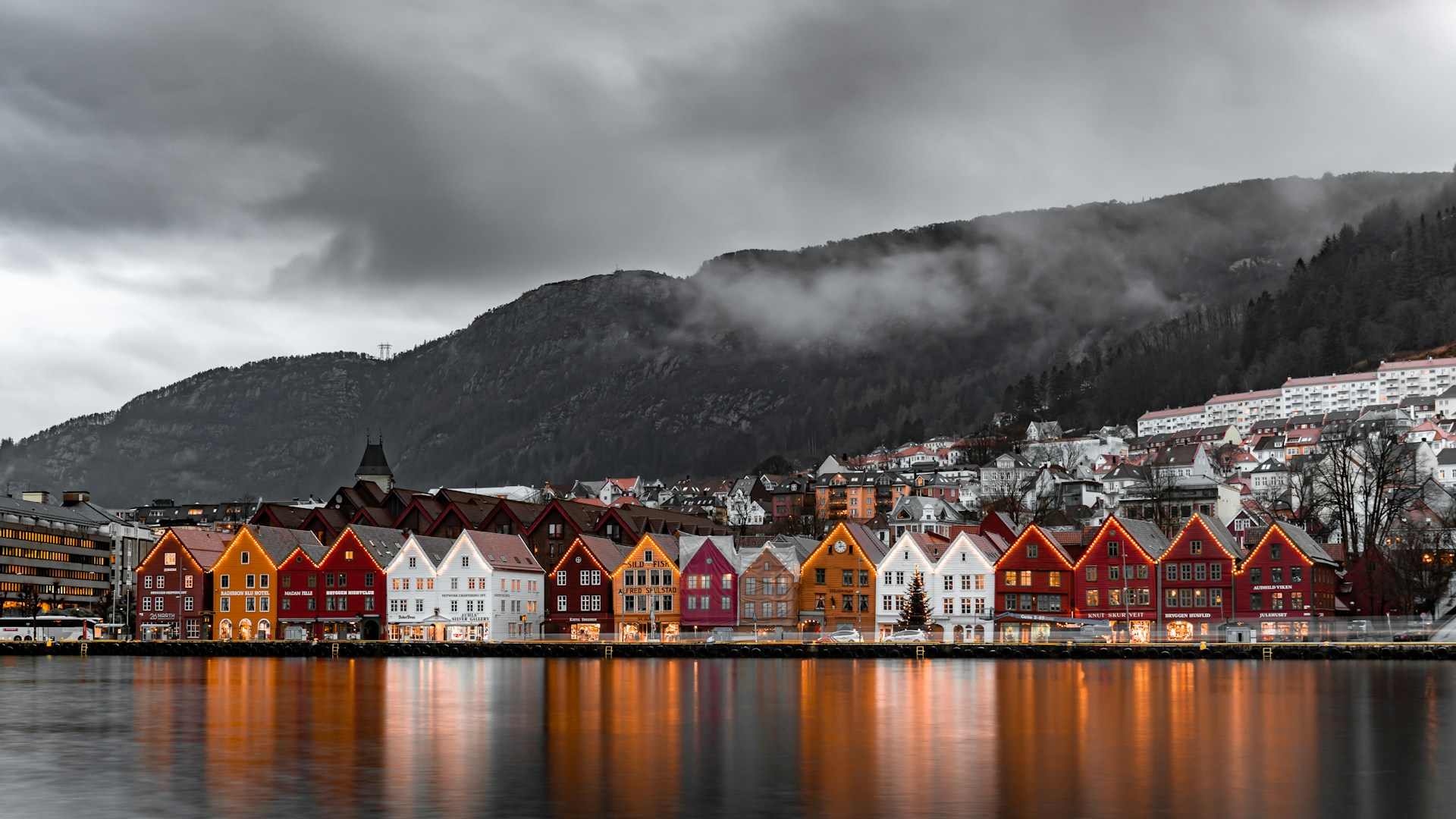
Bergen – The City Between Seven Mountains and Endless Rain
Bergen is squeezed between seven mountains and the North Sea like Norway decided to show off. Colourful Hanseatic warehouses lean over the harbour as if gossiping about the 14th century, rain falls 300 days a year turning every cobblestone into a mirror, and the air smells of salt, fresh fish, and cinnamon buns from bakeries older than most countries. Funiculars climb to viewpoints where the city spreads below like a Lego set built by giants, fjord cruises glide past waterfalls that drop straight into the sea, and locals smile like they know the rain is just the price you pay for living inside a postcard. This is the gateway to the fjords — wet, wild, and so beautiful it hurts.
Top Activities and Experiences in Bergen
These are the moments that taste like skillingsboller and pure fjord mist.
Fløibanen Funicular at Golden Hour
Ride the steep red train to 320 m, walk to the viewpoint while the city turns peach below and the fjords glow like liquid silver in the distance.
Bryggen at Blue Hour
Wander the UNESCO-listed Hanseatic wharves when the lanterns flicker on and the wooden façades reflect in puddles like a painting that just woke up.
Fjord Cruise to Mostraumen
Glide through narrow Osterfjord while waterfalls plunge from 1,000 m cliffs and the captain turns the boat so close you can taste the spray.
Fish Market Breakfast
Eat raw salmon sliced minutes ago, whale steak if you dare, and fresh shrimp piled high while seagulls circle overhead like noisy waiters.
Ulriken Cable Car at Sunset
Ride to the highest of the seven mountains (643 m) and watch the sun drop behind the North Sea while Bergen’s lights twinkle on one by one.
Rainy Day in KODE Museums
Dive into Edvard Munch’s lesser-known works, golden-age Norwegian art, and silver treasures while the rain drums on the roof like applause.
Ready for Rain, Fjords, and Cinnamon Buns?
Bergen doesn’t fight the weather — it dances with it, and invites you to join the waltz. Velkommen — welcome to Norway’s rainiest, happiest city!
Frequently Asked Questions (FAQs) About Bergen
What are the absolute must-do experiences in Bergen?
The must-do experiences are Fløibanen at golden hour, Bryggen at blue hour, fjord cruise to Mostraumen, fish market breakfast, Ulriken sunset, and rainy day in KODE museums.
How many days should I spend in Bergen?
You should spend three to four days — one for the city centre and Bryggen, one for mountains and viewpoints, one for fjord cruise, and one for museums or day trips.
When is the best time to visit Bergen?
The best time is May–September for long days and green mountains. July has midnight sun vibes. Winter is dramatic with snow on the peaks and fewer tourists.
Does it really rain that much?
Yes — 200–300 days a year. Bring waterproof shoes and embrace it; the rain makes everything shine.
Where should I stay in Bergen?
Bryggen area for history (Det Hanseatiske or Opus XVI), Nordnes for local vibe, or Sentrum for convenience. Views: Hotel Norge rooftop.
Best food in Bergen?
Fresh fish at the market, skillingsboller at Baker Brun, seafood at Enhjørningen in Bryggen, and new Nordic at Lysverket.
How do I get from the airport to the city?
Airport bus (30 min, NOK 150), light rail Bybanen (45 min, NOK 40), or taxi (NOK 500–600).
Is the Fløibanen worth it?
Absolutely — the ride alone is fun, and the view from Fløyen is the classic Bergen postcard.
Best fjord cruise?
Mostraumen (3 h) for narrow fjords and waterfalls, or full-day to Sognefjord if you have time.
Is Bergen expensive?
Yes — Norway prices. Save with Bergen Card (free transport + museums) and eat at markets.
Can I see northern lights from Bergen?
Rarely — too far south and light-polluted. Head north to Tromsø for reliable sightings.
Where’s the best view?
Fløyen at golden hour, Ulriken at sunset, or Mount Sandviken on a clear day.