

NepalPlaces to Visit
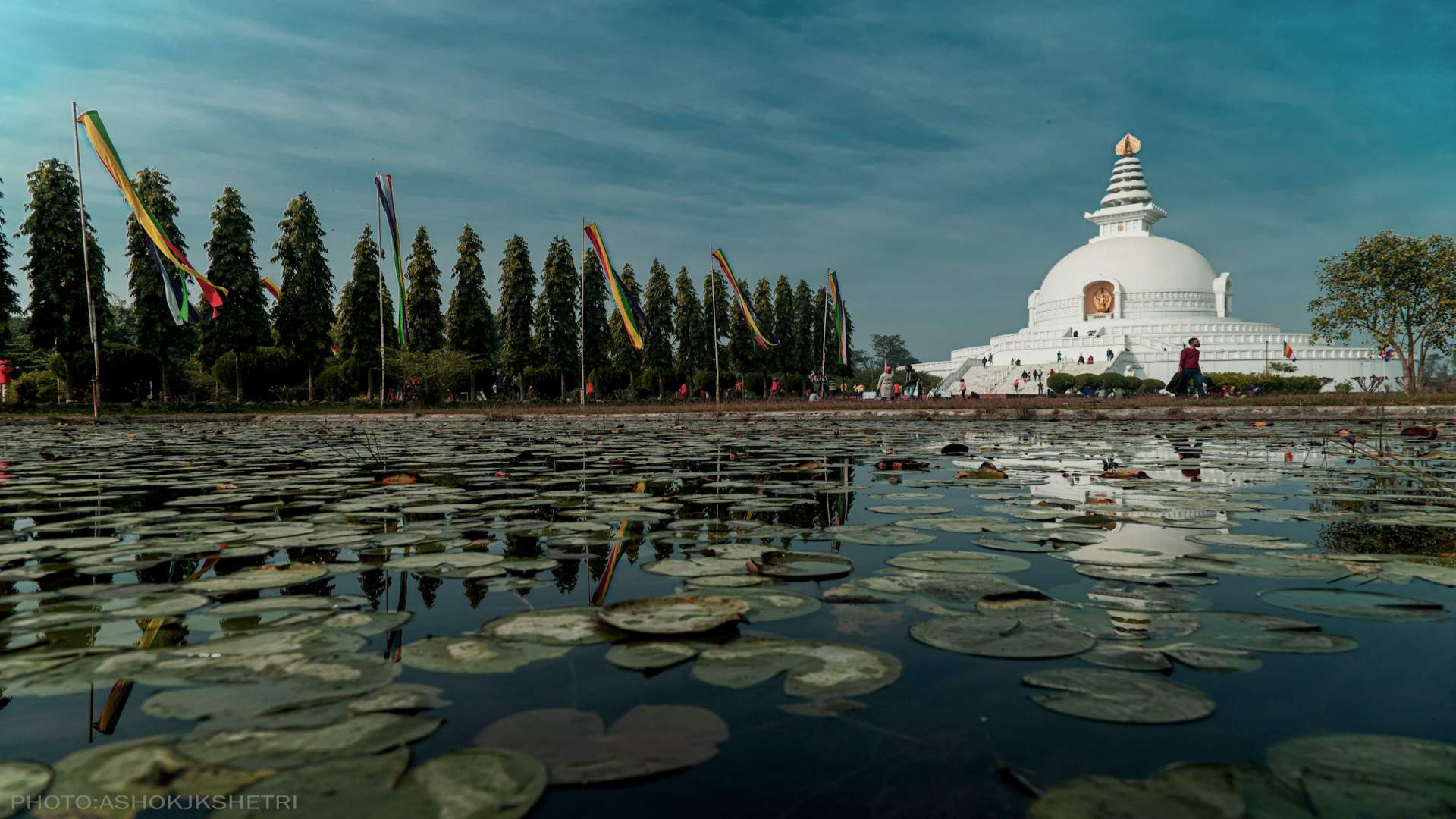
Lumbini – Where the Buddha Took His First Breath
In the flat, humid Terai, a single sal tree still grows where Queen Maya held a branch and gave birth to Siddhartha Gautama in 623 BC. Today that exact spot is protected inside a white temple while monks in maroon and saffron robes walk barefoot across marble that has been kissed by millions of pilgrims. Around it, nations have built monasteries that look like the surface of the moon got drunk on peace: Thai golden chedis, Chinese pagodas, German minimalism, French lotus ponds, and a Korean temple that glows like a lantern at night. The air smells of incense and wet earth, cranes fly overhead at dawn, and the Eternal Peace Flame has burned since 1986. This is the birthplace of the Buddha — quiet, profound, and powerful enough to make even atheists whisper.
Top Activities and Experiences in Lumbini
These are the moments that silence your mind.
Sunrise at Maya Devi Temple
Be the first person inside at 6 a.m., stand alone in front of the exact stone marker where the Buddha was born, and watch the first light hit the 2,600-year-old ruins while monks chant.
Cycling the Monastery Zone at Golden Hour
Rent a bicycle and ride the perfectly flat 5×3 km Sacred Garden while the sun turns every stupa gold and the only sound is spinning prayer wheels.
Meditation Under the Bodhi Tree
Sit beneath descendants of the original tree in Bodhgaya while butterflies land on your shoulders and the world forgets you exist.
Eternal Peace Flame at Dusk
Walk the canal at twilight as thousands of butter lamps are lit and the flame that has burned since 1986 reflects in the water like a fallen star.
Monk Chat at the Thai Monastery
Young monks in saffron robes practice English with visitors — ask about their lives and leave with a blessing and a lighter heart.
Sunset Crane Watching at the Wetlands
Thousands of sarus cranes — the world’s tallest flying bird — return to roost in the marshes while the sky turns blood-red behind distant Himalayas.
Ready for the Place Where Peace Was Born?
Lumbini doesn’t shout — it whispers, and the whole world leans in to listen. Namaste — welcome to the birthplace of the Buddha.
Frequently Asked Questions (FAQs) About Lumbini
What are the absolute must-do experiences in Lumbini?
The must-do experiences are sunrise inside Maya Devi Temple, cycling between monasteries at golden hour, meditating under the Bodhi tree, seeing the Eternal Peace Flame at dusk, and monk chat at any monastery.
How many days should I spend in Lumbini?
Two full days is perfect — one full day for the Sacred Garden and monasteries, one for sunrise, wetlands, and quiet reflection. One rushed day is possible but feels disrespectful to the peace of the place.
When is the best time to visit Lumbini?
November–March is cool and dry with perfect light. December–February is busiest for Buddha Jayanti (May full moon) if you want festivals.
Is Lumbini worth visiting if I’m not Buddhist?
Absolutely — the history, architecture, and sheer peace transcend religion. Many atheists call it one of the most powerful places they’ve ever been.
How do I get to Lumbini?
Fly to Bhairahawa (Gautam Buddha Airport, 30 min taxi), tourist bus from Pokhara/Kathmandu (7–9 h), or private car. No trains.
Where should I stay in Lumbini?
Inside the Sacred Garden zone: Monastery guesthouses (Korean, Chinese) or Lumbini Buddha Garden. Luxury: Buddha Maya Garden Hotel. Budget: Hotel Nirvana or Lumbini Garden Lodge.
Is photography allowed inside Maya Devi Temple?
No phones or cameras inside the inner sanctum, but okay in the outer compound. Respect the silence.
Can I walk or cycle everywhere?
Yes — the entire Sacred Garden is flat and perfect for bicycles (rent for NPR 200–300/day). Electric rickshaws for those who prefer not to pedal.
Is there good food in Lumbini?
Monastery canteens serve simple, delicious vegetarian thali. Best non-veg is at Three Star Restaurant or Flamingo. Try lassi and fresh curd everywhere.
Is Lumbini safe?
Extremely — one of the most peaceful places in Nepal. Monks and pilgrims set the tone.
Can I see the exact birthplace?
Yes — inside Maya Devi Temple, a marker stone and 3rd-century BC ruins show the exact spot protected under glass.
Is there an entrance fee?
Foreigners pay NPR 200 for the Sacred Garden (valid multiple days). Individual monasteries are free.
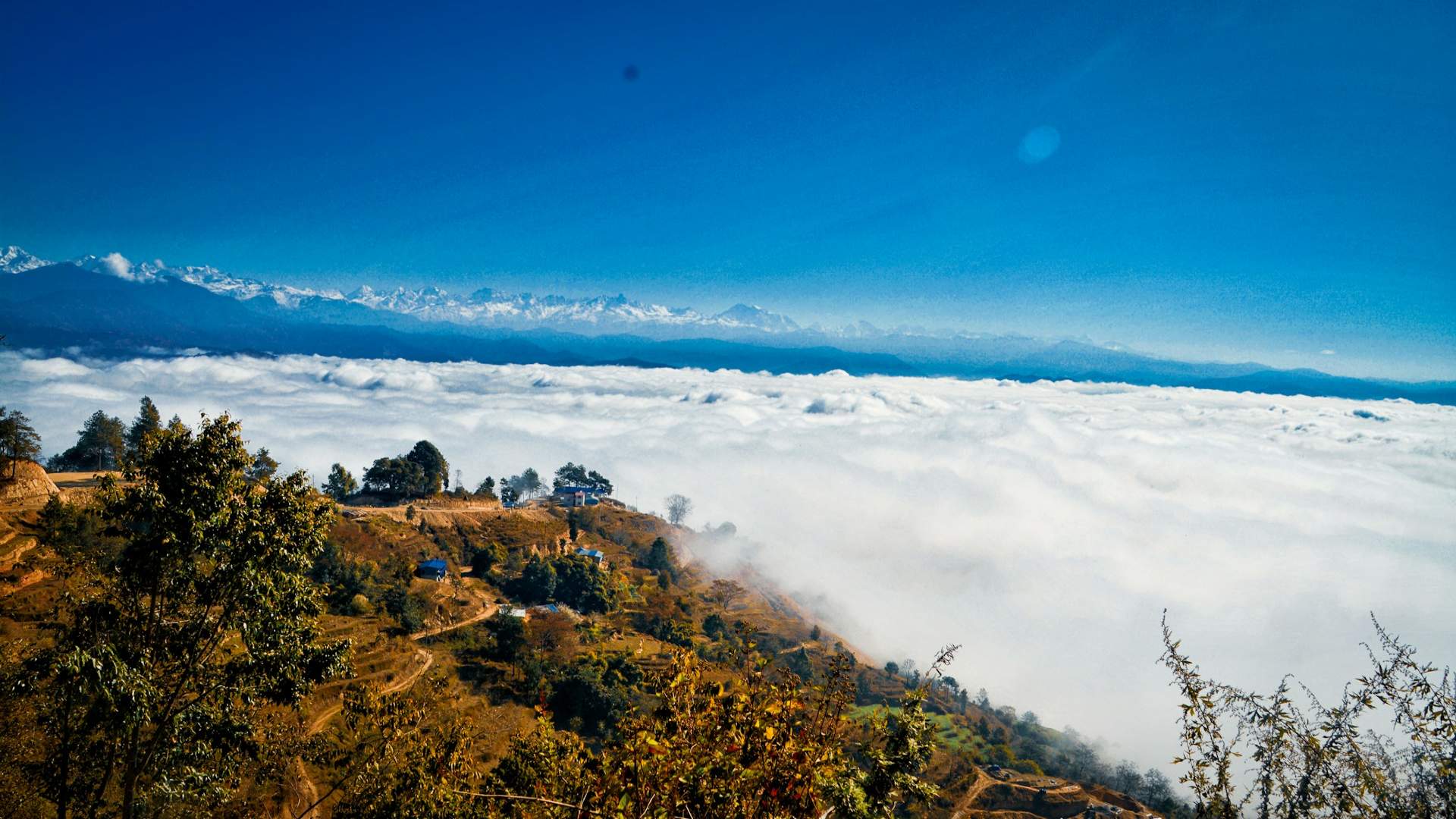
Nagarkot – The Balcony of the Himalayas
At 2,200 metres on a ridge east of Kathmandu, Nagarkot exists for one reason: to give you the longest, clearest, most ridiculous Himalaya panorama on Earth. On a good day you can see eight of the world’s ten highest peaks — Everest, Lhotse, Makalu, Cho Oyu, Manaslu, Ganesh, Langtang, and Annapurna — lined up like snow gods having a meeting. Sunrise turns the entire range molten pink while the valley below is still drowning in cloud, and sunset paints the same peaks blood-red before the stars come out so thick you feel like you’re floating in space. Between those two daily miracles, the ridge is quiet forests, terrace rice fields, and tiny Tamang villages where grandmothers still spin prayer wheels and smile like they know a secret. This is the place people come for one night and leave three days later with tears in their eyes and a memory card full of the same photo taken 400 times.
Top Activities and Experiences in Nagarkot
These are the moments that make you forget how to blink.
Sunrise Over the Entire Himalaya Range
Wake at 5 a.m., wrap yourself in a blanket on your hotel rooftop, and watch the first light hit Everest 140 km away while the rest of the world is still asleep.
Sunset from the View Tower
Walk to the army lookout tower at golden hour and watch the same peaks turn from gold to pink to blood-red while cloud seas swirl 1,500 m below.
Hike the Ridge Trail at Magic Hour
Follow the pine-scented path along the ridge as the sun ignites the rice terraces below and the mountains do a slow-motion colour change behind you.
Breakfast with a Billion-Dollar View
Sit on a hotel terrace with dal bhat or banana pancakes while the snow peaks glow and eagles circle so close you can hear their wings.
Village Walk to Tamang Homestay Experience
Stroll through terraced fields to a traditional Tamang village, drink butter tea with a family, and watch grandmothers spin prayer wheels as the sun sets behind Ganesh Himal.
Star-Gazing in Total Darkness
When the hotels switch off their lights, lie back and see the Milky Way so bright it casts shadows — zero light pollution, zero excuses.
Ready for the Sunrise That Makes Everest Look Close Enough to Touch?
Nagarkot doesn’t just show you the Himalayas — it hands you the best seat in the house and tells you to stay forever. Namaste — welcome to the rooftop of the world!
Frequently Asked Questions (FAQs) About Nagarkot
What are the absolute must-do experiences in Nagarkot?
The must-do experiences are sunrise and sunset from your hotel rooftop or the view tower, hiking the ridge trail at magic hour, having breakfast with the entire Himalaya as your backdrop, and star-gazing when the valley lights disappear.
How many nights should I stay in Nagarkot?
Two nights minimum — one for sunrise, one for sunset, and to give yourself a buffer in case clouds play tricks. Many people stay three and never want to leave.
When is the best time to see the mountains clearly?
October–November and March–April offer the clearest skies. December–February is cold but often crystal-clear. Monsoon hides the peaks completely.
Will I definitely see Everest?
On perfect days (usually Oct–Nov), yes — it’s a tiny white pyramid on the far left of the panorama, 140 km away. Bring binoculars or a zoom lens.
How do I get to Nagarkot from Kathmandu?
Private car or taxi (1–1.5 h, US$25–40), shared jeep from Bhaktapur (cheaper), or tourist bus (2 h). Most hotels arrange pickup.
Where should I stay for the best mountain views?
Club Himalaya (classic), Hotel Country Villa (luxury), or Peaceful Cottage (boutique). All have panoramic glass windows facing the range.
Is Nagarkot cold?
Very — winter nights drop to freezing even when Kathmandu is warm. Bring layers October–March; hotels have blankets and hot water bottles.
Are there good restaurants in Nagarkot?
Hotel restaurants are excellent (Club Himalaya and Country Villa especially). For local food, walk down to the village stalls for momos and dal bhat.
Can I hike from Nagarkot to Changunarayan or Bhaktapur?
Yes — beautiful 4–5 hour downhill trail through pine forests and Tamang villages to UNESCO-listed Changunarayan temple, then bus or taxi to Bhaktapur.
Is there anything to do if the weather is cloudy?
Yes — hike the ridge anyway (clouds often part), visit local Tamang villages, relax with a book and mountain tea, or day-trip to Bhaktapur or Changunarayan.
Are there ATMs or money exchange?
Only a few ATMs and they’re unreliable. Bring cash from Kathmandu.
Is Nagarkot worth it if I’m short on time?
Absolutely — even one night for sunrise is life-changing. Many people say it was the highlight of their entire Nepal trip.
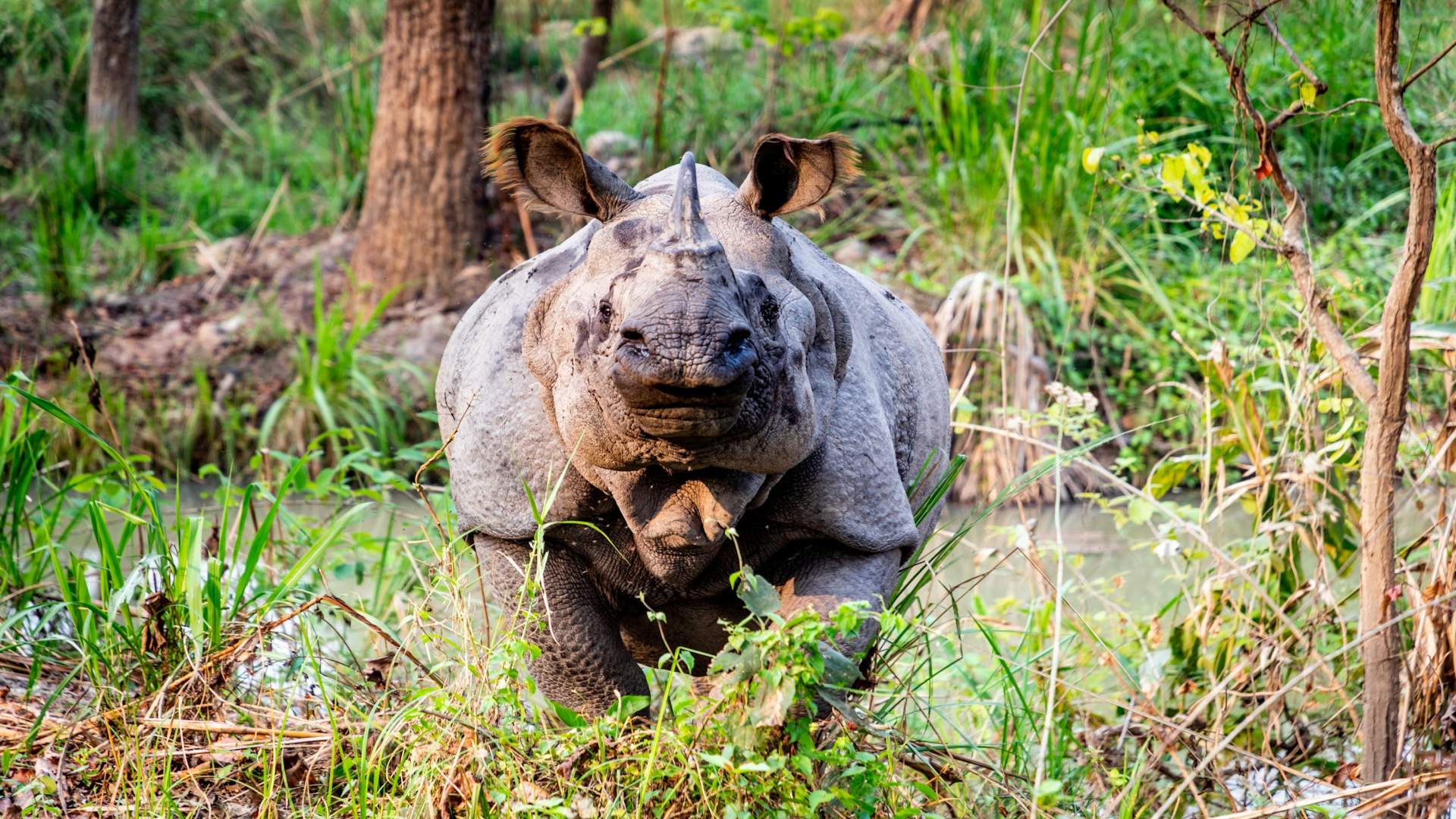
Chitwan – The Jungle That Still Has Teeth
At 5 a.m. the mist hangs like cigarette smoke over the Rapti River while one-horned rhinos bathe like prehistoric tanks. Somewhere in the 10-foot elephant grass, a Bengal tiger is deciding what to have for breakfast. You’re standing in silence on a dugout canoe while a 4-metre mugger crocodile slides past without a ripple. By noon the temperature hits 38 °C and the jungle smells like wet earth, wild elephant dung, and the promise of something ancient watching you from the shadows. This is Chitwan — Nepal’s wild heart, where the Terai jungle still rules and humans are just visiting. Raw, humid, and absolutely alive.
Top Activities and Experiences in Chitwan
These are the moments that make your pulse race.
Canoe Sunrise with Rhinos & Crocodiles
Glide down the Rapti at dawn while rhinos graze on river islands and mugger crocodiles sun themselves like logs with teeth.
Jungle Walk Tiger Tracking
Follow a naturalist through elephant grass taller than you are, learn to read pug marks, and feel the electric silence when your guide whispers “tiger was here five minutes ago.”
Elephant Bathing in the Rapti
Watch rescued elephants spray tourists with trunkfuls of river water — or join in and get gloriously soaked.
Tharu Village Cultural Dance at Dusk
Sit on the ground while firelight flickers on peacock-feather headdresses and stick-dance rhythms tell 400-year-old stories of jungle life.
Jeep Safari to Bishazari Tal (20,000 Lakes)
Bounce deep into the jungle to a hidden wetland where rhinos drink at sunset and 200 species of birds explode into the sky.
Sunset on the Riverbank with Cold Beer
Sit on bamboo platforms while the jungle turns blood-red, rhinos silhouette across the water, and a kingfisher dives like blue lightning.
Ready for Rhinos at Dawn and Tigers at Dusk?
Chitwan doesn’t just show you the jungle — it lets the jungle show you who’s boss. Namaste — welcome to Nepal’s wild side!
Frequently Asked Questions (FAQs) About Chitwan
What are the absolute must-do experiences in Chitwan?
The must-do experiences are dawn canoe with rhinos, jungle walk for tiger tracking, Tharu cultural dance, elephant bathing, jeep safari to 20,000 Lakes, and sunset on the Rapti riverbank.
How many days should I spend in Chitwan?
Three full days/two nights minimum — one for arrival and village, one for full-day safari activities, one for canoe and relaxation. Four days is perfect.
When is the best time to visit Chitwan?
October–March — cool, dry, animals at waterholes, grass cut low for visibility. April–May is hottest but best tiger spotting. Avoid monsoon (June–Sept).
Will I definitely see a tiger?
No guarantees — Chitwan has ~250 Bengal tigers, but they’re shy. You have a realistic chance (20–40 %) on a multi-day safari with good guides.
Is elephant riding still allowed?
No — banned since 2020 for ethical reasons. All elephant interaction is now bathing/feeding with rescued animals or jeep/canoe/foot safaris.
Where should I stay in Chitwan?
Inside the park buffer zone: Sapana Village Lodge, Jungle Villa. Luxury: Meghauli Serai (Taj) or Barahi Jungle Lodge. Riverside: Hotel Parkside or Green Mansions.
How do I get to Chitwan from Kathmandu/Pokhara?
Tourist bus (5–7 h), private car (4–5 h), or flight to Bharatpur (20 min) + 1 h drive. Most hotels include pickup from Sauraha bus stop.
Is Chitwan safe?
Very safe — guides are armed with sticks (not guns) and trained for wildlife encounters. Malaria risk is low but take mosquito repellent.
Best food in Chitwan?
Tharu set meal at local homestays, river fish barbecue, and anything cooked over a wood fire. Try jhol momo and wild honey.
Can I visit independently or do I need a package?
You can DIY everything in Sauraha, but a 2–3 night package with a reputable lodge is easier and often cheaper (includes all activities and meals).
Are there rhinos everywhere?
Almost — ~700 one-horned rhinos live here. You’ll see them on almost every canoe trip or jeep safari.
Is it worth it if I only have one day?
Not really — you’ll feel rushed. Two nights is the sweet spot.
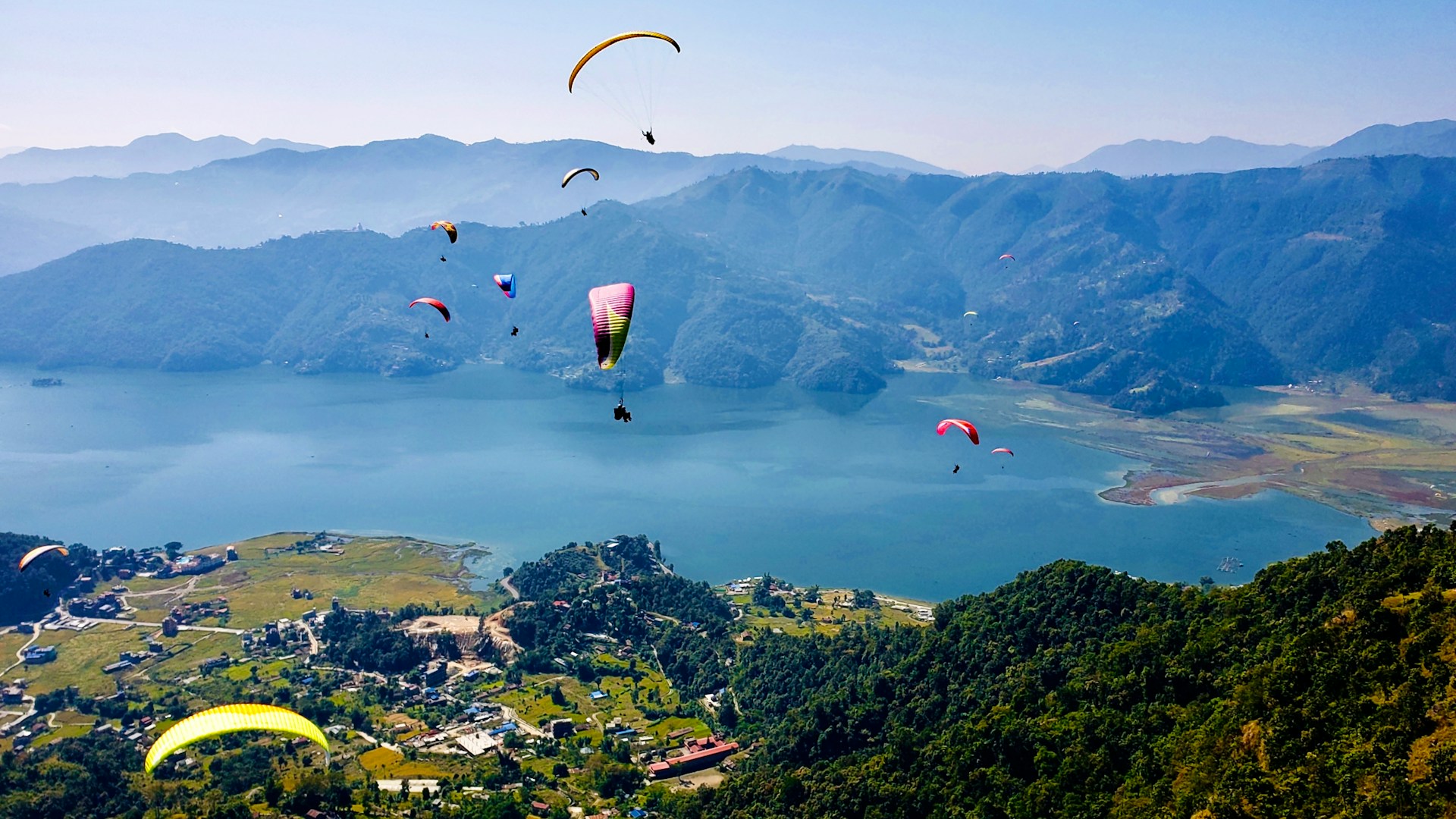
Pokhara – The City That Makes the Himalayas Look Photoshopped
Pokhara wakes up staring at itself in Phewa Lake while the Annapurna and Machhapuchhre (Fishtail) peaks — 7,000–8,000 m monsters — glow pink, gold, then blazing white, all before breakfast. Paragliders drift like colourful butterflies between the mountains and the lake, boats painted with tiger eyes glide across mirror-still water, and the air smells of momos at street stalls and pine drifting down from the hills. This is Nepal’s adventure capital, its honeymoon capital, its chill-out-after-trekking capital — a lakeside town so laid-back it makes Kathmandu look like New York, and so stupidly beautiful that even the clouds line up for the sunrise show.
Top Activities and Experiences in Pokhara
These are the moments that ruin every other view forever.
Sarangkot Sunrise
Wake at 4:30 a.m., drive or hike up 1,592 m, and watch the first light explode across the entire Annapurna massif while Machhapuchhre’s perfect pyramid turns from pink to molten gold.
Paragliding Over Phewa Lake
Run off a hill with a stranger strapped to your back, soar with eagles at 1,500 m, and land on the lakeshore while the mountains do a 360° slow-motion spin around you.
Boat to Tal Barahi Temple at Golden Hour
Row across mirror-calm Phewa Lake while the sky catches fire behind the World Peace Pagoda and Fishtail reflects so perfectly it looks fake.
World Peace Pagoda Sunset
Hike or drive to the gleaming white stupa on Anadu Hill and watch the sun drop behind the Annapurnas while prayer flags snap and the lake turns liquid mercury.
Lakeside Momo & Cold Everest Beer Crawl
Start at Busy Bee at 8 p.m., work your way along the strip eating buffalo momos and drinking beer so cold it hurts your teeth while live bands play Nepali reggae.
Devi’s Fall & Gupteshwor Cave at Opening
Watch an entire river disappear underground with a roar, then descend into a dripping cave to find a shrine behind the waterfall lit by a single shaft of light.
Ready for Paragliders, Sunrise Peaks, and Lakeside Momos?
Pokhara doesn’t just show you the Himalayas — it lets you live inside the postcard. Namaste — welcome to Nepal’s most beautiful city!
Frequently Asked Questions (FAQs) About Pokhara
What are the absolute must-do experiences in Pokhara?
The must-do experiences are sunrise from Sarangkot, paragliding over Phewa Lake, sunset from World Peace Pagoda, boating to Tal Barahi at golden hour, and a Lakeside momo crawl.
How many days should I spend in Pokhara?
Three to five days — one for sunrise/paragliding, one for lake and temples, one for relaxing and food, extras for short treks or just doing nothing with a view.
When is the best time to visit Pokhara?
October–November for crystal-clear mountain views, March–April for rhododendrons and perfect flying weather. December–February is cold but clear; monsoon (June–Aug) hides the peaks.
Is paragliding safe in Pokhara?
Yes — it’s one of the safest and most scenic places in the world to fly. Tandem pilots have thousands of flights; just book with reputable companies (Sunrise, Blue Sky, etc.).
Where should I stay in Pokhara?
Lakeside for everything (Hotel Barahi, Temple Tree). Luxury: Fishtail Lodge or The Pavilions Himalayas. Quiet: Begnas Lake (30 min away) or Peaceful Cottage.
Is the lake clean enough to swim?
Not really in the main tourist area — better to swim at Begnas or Rupa Lakes (20–30 min away) or just enjoy the views.
How do I get from Kathmandu to Pokhara?
Fly (30 min, US$50–120) for views, tourist bus (7–8 h, US$10–25) for scenery, or private car (6 h).
Best food in Pokhara?
Momos at Byanjan or Moondance, dal bhat at Krishna’s, Newari set at Newari Kitchen, and pizza at Godfather’s when you need comfort food.
Can I see the mountains every day?
In clear season (Oct–April) yes — Annapurna South, Hiunchuli, and Machhapuchhre are visible from almost everywhere in town.
Is Pokhara good for non-trekkers?
Absolutely — paragliding, boating, short hikes, and pure chilling with views are world-class. You never have to walk far.
Are there ATMs and money exchange?
Yes — dozens along Lakeside. Most accept foreign cards; carry some cash for smaller places.
Is Pokhara safe?
Extremely safe and incredibly relaxed — even solo female travellers report feeling completely comfortable.
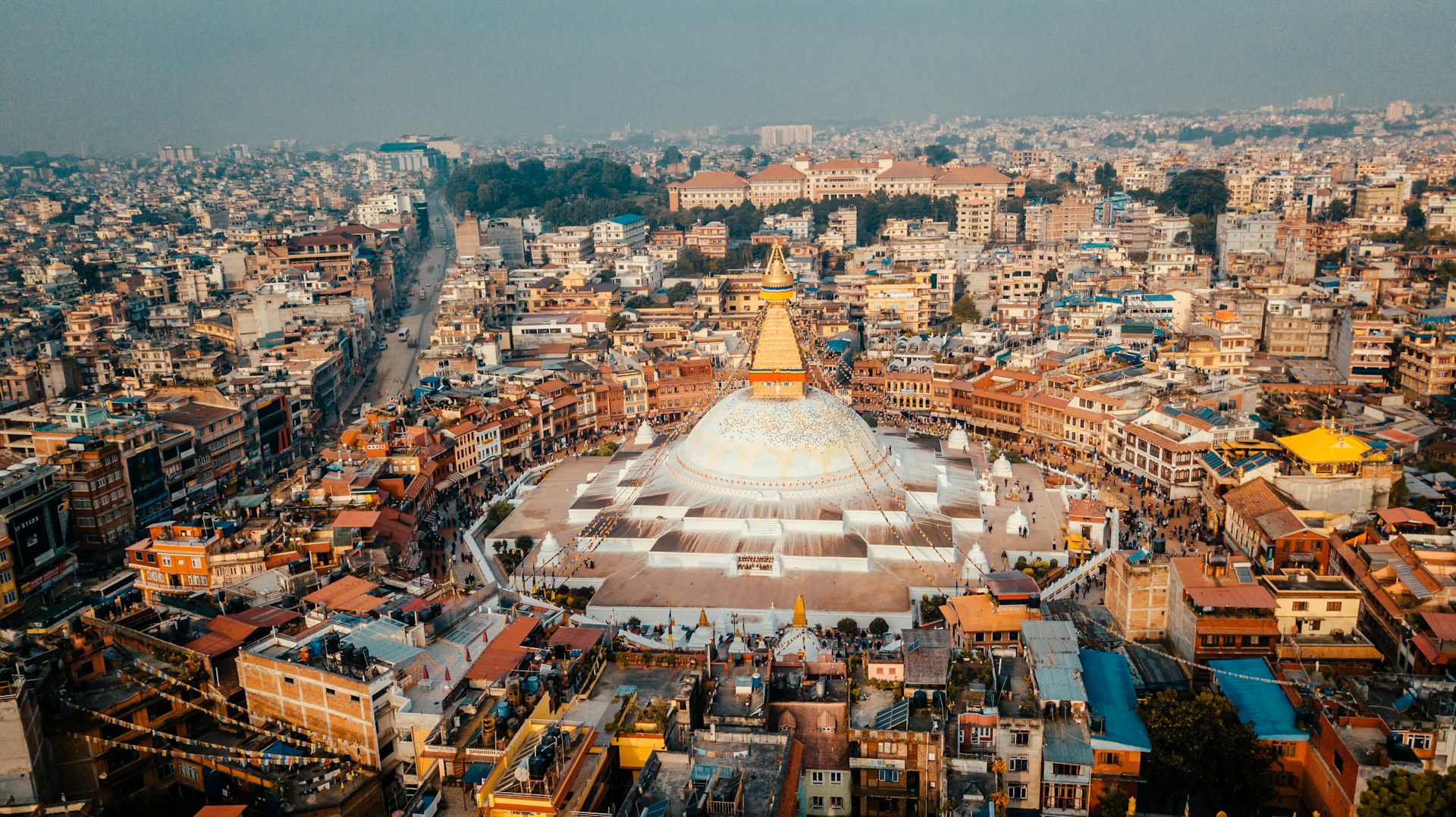
Kathmandu – The City That Runs on Incense, Chaos, and Momos
Kathmandu doesn’t walk — it vibrates. A thousand temple bells compete with a million motorbike horns while marigold garlands drip from every doorway and sadhus with ash-smeared foreheads smoke chillums next to schoolgirls in uniforms. The air is thick with burning butter lamps, diesel, and the sweet smoke of momo steamers working overtime. Ancient stupas the size of apartment blocks rise above medieval palaces that lean like drunks after the 2015 earthquake, and every brick seems to have its own resident god. The Himalayas watch from the north like silent guardians, while down in the valley, life explodes in colour, noise, and the unshakable belief that everything — even the traffic jam — is part of a divine plan. This is the beating, breathing, beautiful chaos of Kathmandu.
Top Activities and Experiences in Kathmandu
These are the moments that rewrite your soul.
Sunrise at Swayambhunath (Monkey Temple)
Climb 365 steps before the city wakes, spin prayer wheels while monkeys steal offerings, and watch golden light flood the valley as a thousand butter lamps flicker to life.
Boudhanath Stupa at Dusk Kora
Join hundreds of pilgrims circling the largest stupa in Nepal while the sky turns blood-orange, butter lamps glow, and monks chant deep enough to vibrate your bones.
Getting Lost in Thamel at Night
Neon signs in Devanagari script, live reggae from hidden bars, the smell of momos and hashish, and the electric feeling that anything could happen before morning.
Pashupatinath Cremations at Golden Hour
Watch Hindu funeral pyres on the holy Bagmati while sadhus meditate on stone platforms and the sky turns the colour of marigolds — raw, sacred, unforgettable.
Momo Marathon in a Hidden Courtyard
Find a tiny hole-in-the-wall where a Newari grandmother has been folding dumplings since before you were born — chilli sauce so good you’ll cry.
Durbar Square at Magic Hour (any of the three)
Walk among living goddesses (Kumari), carved wooden windows that took artisans lifetimes, and temples older than most countries while the sun turns everything molten gold.
Ready for Temples, Momos, and Himalayan Dawn?
Kathmandu doesn’t just show you Nepal — it downloads it straight into your bloodstream. Namaste — welcome to the city that runs on prayer wheels and pure chaos!
Frequently Asked Questions (FAQs) About Kathmandu
What are the absolute must-do experiences in Kathmandu?
The must-do experiences are sunrise at Swayambhunath, dusk kora at Boudhanath, getting lost in Thamel at night, witnessing cremations at Pashupatinath, eating momos until you can’t move, and wandering any Durbar Square at magic hour.
How many days should I spend in Kathmandu?
You should spend four to six days — two for the Kathmandu Valley’s three Durbar Squares and Swayambhunath, one for Boudhanath and Pashupatinath, one for Thamel nightlife and markets, and extra days for day trips or recovery from altitude/food/spiritual overload.
When is the best time to visit Kathmandu?
October–November (post-monsoon clarity, festivals), March–April (rhododendrons, clear Himalaya views). Avoid monsoon (June–Aug) unless you love rain, and winter (Dec–Feb) can be cold and hazy.
Is Kathmandu safe for solo travellers?
Very safe — locals are warm, helpful, and used to tourists. Standard precautions apply (watch bags in crowds, use registered taxis at night).
How much does street food cost?
Momos NPR 100–200, thukpa NPR 150, chai NPR 20, full meal at a local joint NPR 300–500. You can eat like a king for under $10 a day.
Where should I stay in Kathmandu?
Thamel for nightlife and convenience, Boudha for peace near the stupa, Patan for artsy heritage vibe. Luxury: Dwarika’s or Hyatt Regency. Boutique: Traditional Homes or Kantipur Temple House.
Do I need a guide for the temples?
Not strictly, but a good guide brings the mythology alive. Many sites have English signs, and locals are happy to explain if you ask politely.
Is the air pollution bad?
Yes in spring (dust) and winter (inversion). Bring a mask for motorbike-heavy areas. It clears dramatically after rain.
Can I see the Himalayas from Kathmandu?
On crystal-clear days (usually Oct–Nov or after rain), you can see snow peaks from Swayambhunath, Chandragiri, or Nagarkot (1 h drive).
What’s the one food I cannot miss?
Momos (try buffalo at Yangling Tibetan in Boudha), Newari bara, dal bhat with gundruk, and sel roti during festivals.
Is Thamel too touristy?
Very — but venture one block off the main drag and you’re back in real Kathmandu with zero tourists and twice the flavour.
How do I get from the airport to Thamel?
Prepaid taxi NPR 800–1,200 (30–60 min depending on traffic). Airport buses exist but are slow. Use a ride app if you have local SIM.